Guide · Buying guide
Best anti-chafe for running: balm vs film vs guards
Disclosure: We make anti-chafe film and nipple guards. This guide compares all common options, including ones we don't sell.
Quick answer
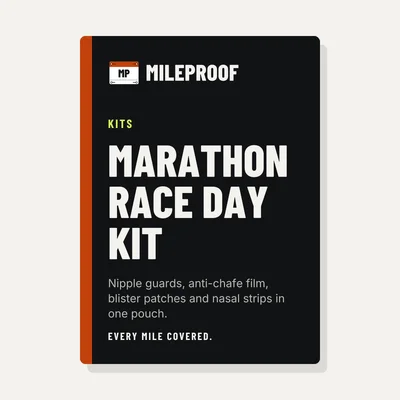
The best anti-chafe setup for running depends on the spot and the distance. For runs up to a couple of hours, a balm or petroleum jelly on thighs and underarms works for most people. For marathons, hot or wet races, use something that doesn't wear off: anti-chafe film on inner thighs and underarms and nipple guards or skin-safe tape on the chest, plus fitted, moisture-wicking clothing instead of cotton.
- Friction plus moisture causes chafing; clothing is the first fix.
- Lubricants reduce friction at first but can wear off; one review found friction rose above baseline after about 90 minutes on skin.
- Physical layers (film, guards, tape) suit long or wet races where reapplying is hard.
- Never put lubricant where an adhesive needs to stick.
Options compared
| Option | Best for | Trade-offs |
|---|---|---|
| Anti-chafe balm / stick | Thighs, underarms, bra lines on runs up to a few hours | May need reapplying on long or wet efforts |
| Petroleum jelly | Cheap barrier for short runs | Greasy, stains clothes, wears off |
| Powder | Keeping skin dry in skin folds | Clumps when soaked |
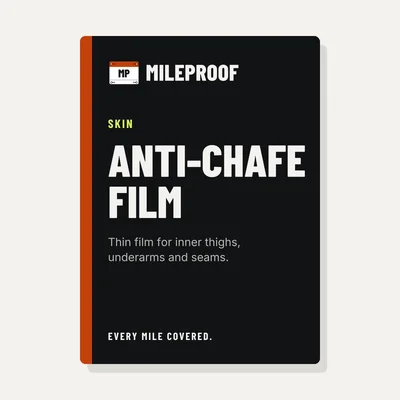
| Anti-chafe film | Inner thighs, underarms, wetsuit neck in long or wet races | Must go on dry skin; cut to fit |
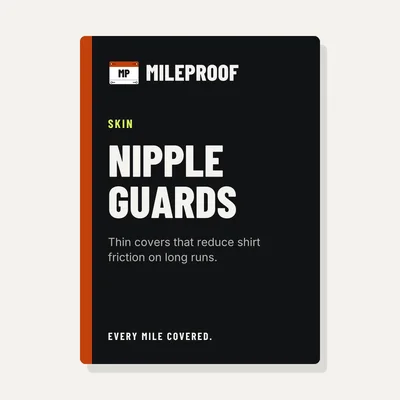
| Nipple guards / skin-safe tape | Nipples on long runs | Tape can pull hair; never use duct tape[4] |
| Clothing | Everything | Fitted, moisture-wicking fabric and longer shorts or tights; avoid cotton[2] |
Start with clothing
Cleveland Clinic describes chafing as friction damage made worse by moisture and recommends fitted, moisture-wicking clothing without rough seams or tags.[1] The AAD advises against cotton because it soaks up sweat.[2] For inner thighs, running tights or shorts with a longer liner solve many cases before any product is needed.
Balm or film?
Lubricants and balms are quick and work well on shorter runs, but they can wear off. A 2024 review of friction studies found that lubricants reduced skin friction for about 90 minutes, after which friction rose above baseline.[3] That review measured feet, but the pattern explains why runners reapply balm in long races. A thin anti-chafe film puts a physical layer on the skin and isn't designed to be reapplied mid-race. Many marathoners use both: film on the inner thighs, balm on smaller spots.
By body area
- Inner thighs: tights or longer shorts plus film or balm. See inner thigh chafing.
- Nipples: nipple guards or skin-safe tape. See runner's nipple.
- Underarms and bra lines: balm for shorter runs, film for long ones.
- Wetsuit neck (triathlon): film or a lubricant labeled safe for neoprene.
If you've already chafed
Stop, wash gently with mild soap, pat dry and protect the skin while it heals; don't put adhesives on broken skin. See a doctor if it doesn't improve in a few days or shows signs of infection.[1]
FAQ
What is the best anti-chafe for a marathon?
One that lasts the distance: fitted, moisture-wicking clothing plus anti-chafe film or a long-lasting balm on thighs and underarms, and nipple guards or skin-safe tape on the chest. Test it on your longest run.
Is anti-chafe balm better than Vaseline?
Both reduce friction. Purpose-made balms are usually less greasy and kinder to clothing; both may need reapplying in long or wet races.
Sources
- Chafing. Cleveland Clinic.
- How to prevent and treat blisters. American Academy of Dermatology.
- Friction blisters of the feet: a critical assessment of current prevention strategies. Rushton & Richie, Journal of Athletic Training, 2024.
- Jogger's nipple: how to avoid nipple chafing. Cleveland Clinic.
- Chafing. MedlinePlus, US National Library of Medicine.